That customary eastern blade acts as a stunning showcase of talent, but imagine you aim to to demonstrate your exclusive aesthetic? Altering your sword is a enriching journey, allowing you to forge a truly rare piece. From the handle wrapping and clasp to the tsuba design and cutting motif, each segment offers a chance for distinctive style. This exploration delves into the space of katana revisions, providing information for both starters and well-versed enthusiasts looking for to imprint their stamp on the traditional art of the samurai.
Starter True Artistry
For learners motivated to embark on the exciting journey of historical swordplay, 1060 steel katanas offer an outstanding entry point. This defined grade of essential steel strikes a nice compromise between value and excellence . While not as hard as top-tier steels, 1060 supports a suitable level of fine tuning , making it beneficial for beginners to learn the basics of katana upkeep and admire the allure of classic Japanese weaponry. It’s a first-rate choice for obtaining experience without the pecuniary burden of more enhanced steels.
Grade T10 Cutlasses: Balancing Performance and Affordability
For enthusiasts seeking an authentic katana experience without breaking the bank , T10 steel katanas represent a advantageous option. These implements offer a clear improvement in lastingness compared to basic alternatives, exhibiting sufficient edge retention and ample flexibility for simple chopping techniques. While not rivaling the exceptional characteristics of higher-grade steels like T100 or folded compound, T10 provides a admirable blend of effectiveness and economy , making them a favored choice for newcomers and those on a limited resources .
Overcoming the Cutting Surface : Modifying Your Katana's Attachments and Shaft
Despite the honed sharpened metal is undeniably the key point of a katana, truly enhancing its beauty lies in the detailed customization of its accessories and grip . This operation allows admirers to showcase their inimitable manner . Explore the sweeping possibilities: menuki - decorative accents that contribute visual attraction ; the hamon wrappings – often elaborately crafted ; the tsuka essence itself, wrapped in genuine ito string ; and the fusa knob , which can be designed from various resources like gold or cartilage .
- Choose subjects that align with you.
- Evaluate with diverse composites .
- Focus on robustness for a long-term result .
The Attraction of the Katana: Legacy, Artistry, and Steelwork
A eastern saber holds a singular allure, steeped in times of Nippon's history and culture . More than merely a apparatus of battle , it's a token of the fighter class ethos – a fusion of artistry and governance . Its expansion spanned numerous generations, with early edges evolving into the sophisticated curvature and effective edge we distinguish today. The construction involved is truly astounding , requiring long periods of instruction to complete. The process involves a intricate folding of refined metal , creating layers that reinforce the instrument’s flexibility and slicing ability. Multiple schools of crafting appeared , each with their separate secrets and techniques for achieving the perfect stability and acuteness - a truly grueling pursuit.
- Original Katana styles
- The task of the katana in warrior culture
- Classic metalworking approaches
Choosing the Perfect Steel for Your Sword Project Project: 1060 vs. T10
Picking the appropriate steel is fundamentally important for any weapon project, and the judgment between 1060 and T10 can be tough. 1060 is a regular American fabrication, offering a fair balance of resilience and sturdiness, causing it somewhat easy to process. However, T10, a from Japan steel, typically boasts better wear resistance and can potentially achieve a amplified end hardness, although it can be significantly complex to operate and requires careful heat processing. Consider your experience level and aimed features: for a novice, 1060 may be a better entry, while the experienced smith might use the expanded characteristics of T10.
- Effortlessness of Handling
- Wear
- Terminal Tenacity
Accessing Excellence: Progressive Katana Alteration Approaches
Developing mastery in sword customization extends far beyond basic sharpening. Serious dedicated users are now probing advanced techniques to truly liberate a blade's hidden potential. This incorporates intricate work with the temper design, utilizing specialized substances for differential annealing and carefully identifying the profile of the hilt guard to optimize balance and efficiency. Beyond purely functional adjustments, artisans are increasingly focused on developing unparalleled aesthetic beauty, through complex decorating and layered surfaces that truly transform a katana into a exquisite object.
From Raw Steel to Masterpiece: Crafting a 1060 Katana
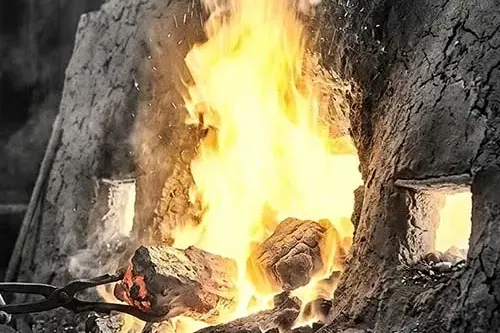
The journey opens with ordinary 1060 material , a rigid material far apart the polished katana it will shift into . Experienced bladesmiths practice a complex process of integrating and constructing the unrefined steel, repeatedly glowing it and beating samurai sword it to rid impurities and produce a homogeneous grain structure. This time-consuming process, often extending for intervals , builds the necessary power and ductility characteristic of a genuine Japanese armament . Follow-up heat methods , including meticulous hardening and resting, are imperative to achieve the preferred equipoise of sharpness, longevity and attractiveness .- Integrating: Lessens impurities and builds grain structure.
- Crafting: Builds the steel into the initial blade form.
- Cooling: Sets the final hardness and flexibility.
The Enduring Appeal of the Katana: A Deep Dive into Steel and Customization
An historic katana holds present a intense symbol of Japanese heritage , its fascination far exceeding mere armaments . Forged from rare steel and habitually featuring intricate trims, the process of creation itself is a revered art. Beyond the basic craftsmanship, the ability to modify a katana - from the temper curve to the grip wrapping and clasp - opens for a perfectly individual communication for both supporters and followers alike. This amalgamation of tradition-rooted steelwork and boundless personalization brings the katana's continued presence across the realm .